
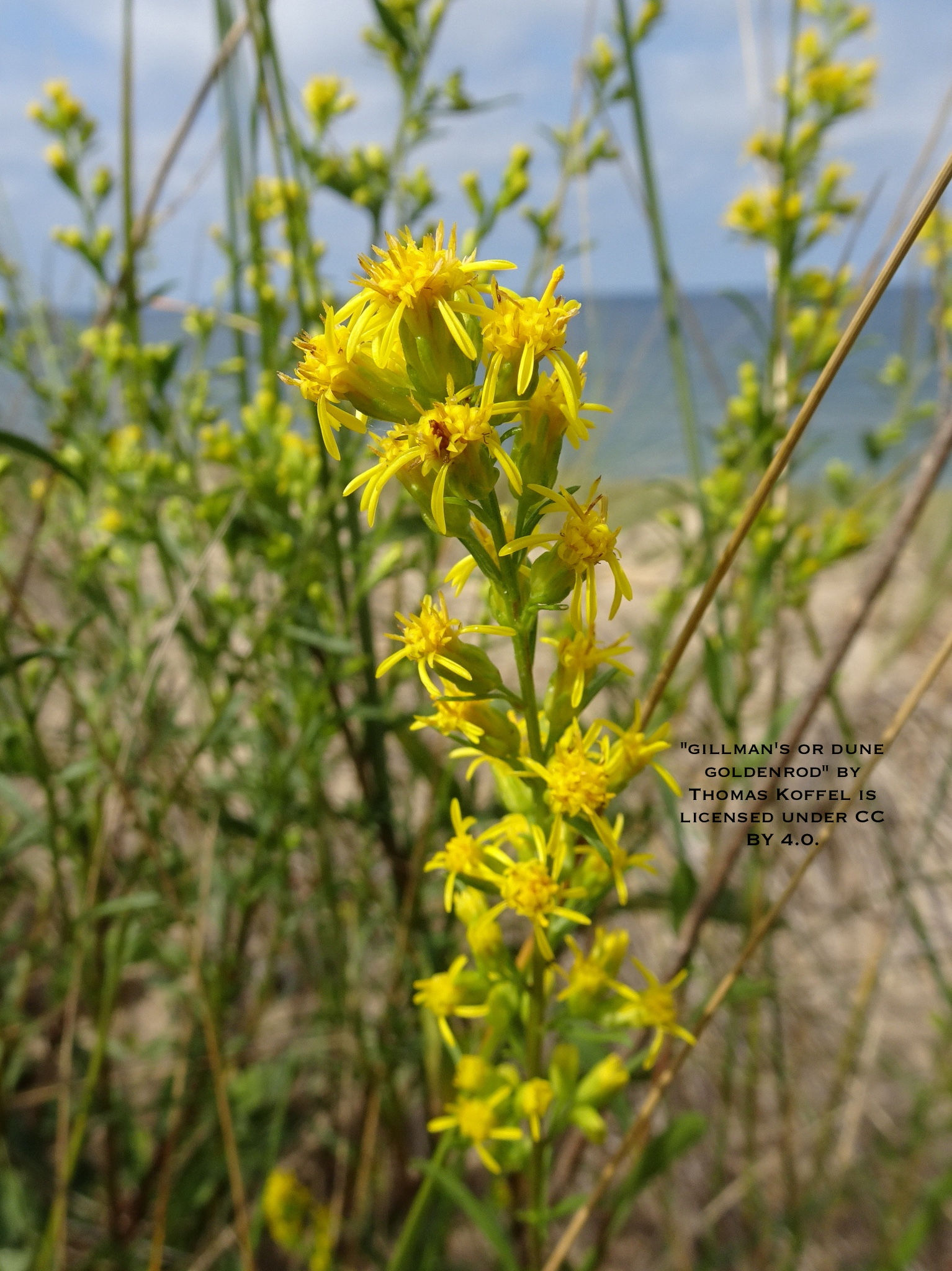

Goldenrod, Dune - Solidago simplex var. gillmanii
Solidago simplex, also known as Solidago Gillmanii, Dune, Alpine, Gillman's, or Sticky Goldenrod, is a perennial wildflower native to Michigan and the Upper Peninsula. It is found primarily along the shores of the Great Lakes, and also in sandy jack pine areas. Its preference is for semi-stabilized sand dunes, according to IllinoisWildflowers, but it also can be found on the slopes or tops of dunes knit with Beach Grass. We have found it on the shore of Lake Superior between dunes or beaches and the road, or on rocky outcrops. It prefers full sun, and medium to dry sandy or rocky soil. When not covered with sand, the leaves and flowers can be sticky to the touch.
Ours is a subspecies (gillmanii, according to Michigan Flora) that tends to be taller and showier with strikingly large individual flowers in the inflorescence, making this a dramatic goldenrod during its mid to late summer bloom time. This is a polite plant, reaching 3 feet in height. It may spread into small colonies using short rhizomes, otherwise it spreads by seed. However, it does not appreciate competition and is more likely to get overshadowed in a dense planting than to crowd anything out.
Little is known about Dune Goldenrod and specific insect relationships. Goldenrods in general support many many types of bees, moths, and other pollinators. The seeds are eaten by songbirds, and I have seen deer clipping dry seed heads protruding above the early winter snow. This is a valuable and colorful plant for extremely sandy or rocky areas.