
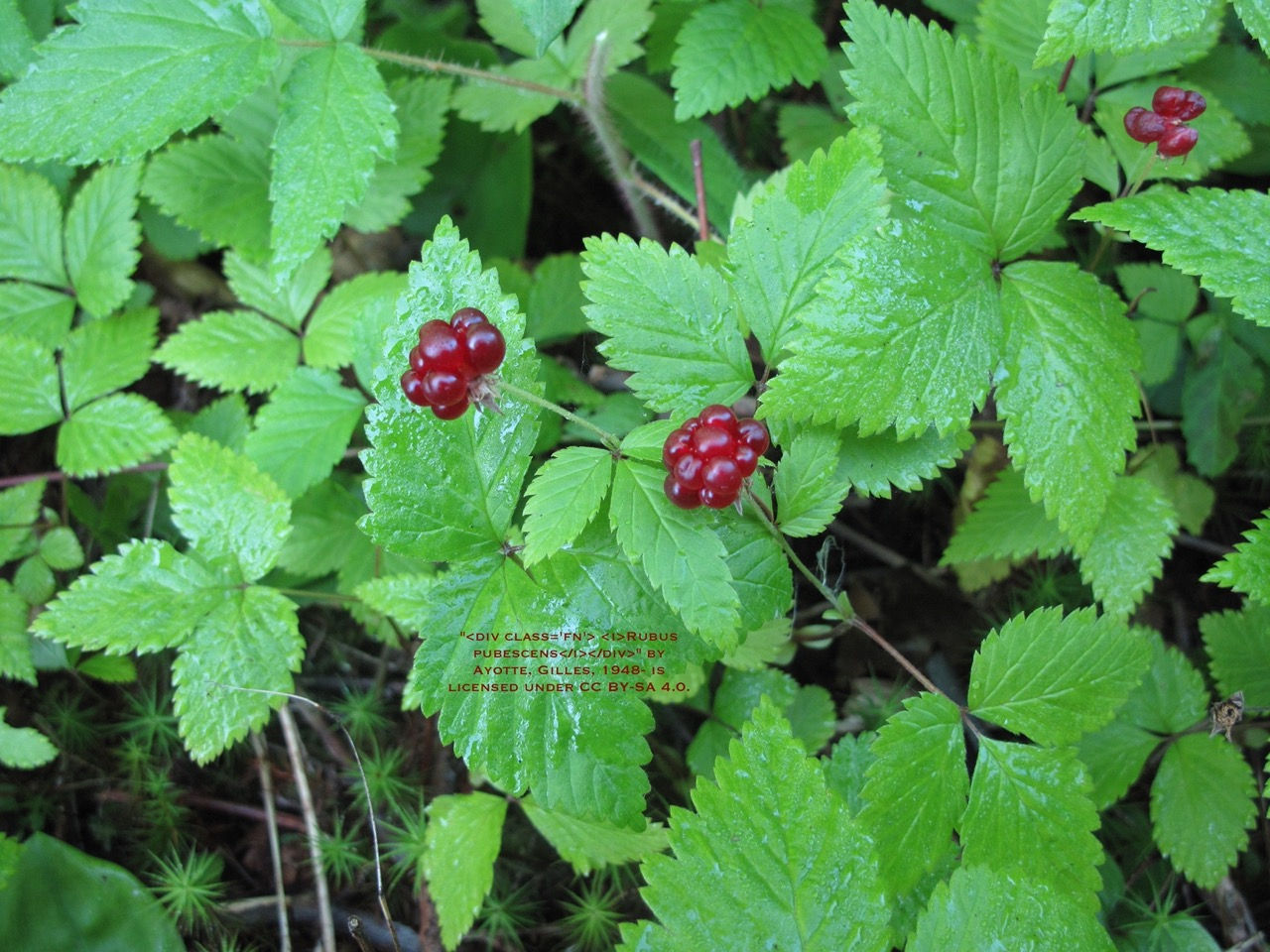

Dwarf Raspberry - Rubus pubescens
Rubus pubescens, also known as Dwarf Raspberry or Dewberry, is a perennial wildflower/subshrub native to Michigan and the Upper Peninsula. According to the Northern Ontario Plant Database, its Ojibway name is agaasaabaminaagozi-miskomin.
This plant is tiny, and the berries are small, but they are tasty, if the wildlife and birds let you have any. This is a low-growing ground cover component, maxing out around 8 inches in height. In May or June it sports white flowers similar to other raspberries and is an early pollinator resource. The flowers are followed in later summer by edible red fruit which are usually too sparse to collect for jam, but make a happy handful. Note that the drupelets do not usually separate from the center white part, but you can just eat the whole thing. One more treat - the stems are hairy rather than having spines.
Dwarf Raspberry prefers moist woodlands where it incorporates itself into the ground cover as long as vegetation is not too dense. It can also grow in full sun in swamps, shorelines, banks, or other habitats with adequate water. We have found it clustered densely on wooded hillsides where the vegetation has been disturbed, but usually it is sparse and easy to overlook. Its habit of spreading with long runners, like strawberries, makes it a great plant for slopes, rock faces, shorelines, and other difficult habitats. If there is no competition, such as bare slopes or containers, this plant can send out a massive amount of stolens/runners.
It has a shallow root system and does not need much soil to get a foothold. This would be a good choice for rock gardens, woodland gardens as a matrix plant or ground cover, or for container gardening. It pairs well with Bunchberry, Canada Mayflower, Starflower, Starry Solomon’s Seal, and Enchanters Nightshade (coming soon).
I couldn't find specific faunal relationships for this species, but Illinois Wildflowers and other sources list many insects, mammals, and birds that use the flowers, leaves, and fruit of various raspberries. The pollen and nectar of early flowers are important for native bees and other pollinators. The leaves host, butterflies, many moths, and a long list of other insects, most of whom are a food source for birds. The berries are beloved by even more birds, turtles, and mammals, including people. Deer and rabbits will browse the foliage, so protect your main plant and let the runners spread out to feed your wildlife.
Fall Sale